
📌 Introduction
In today’s digital-first world, businesses are constantly looking for smarter ways to spend their marketing budget. Traditional advertising often feels like a gamble—you spend money without guaranteed results. That’s where Performance Marketing comes in.
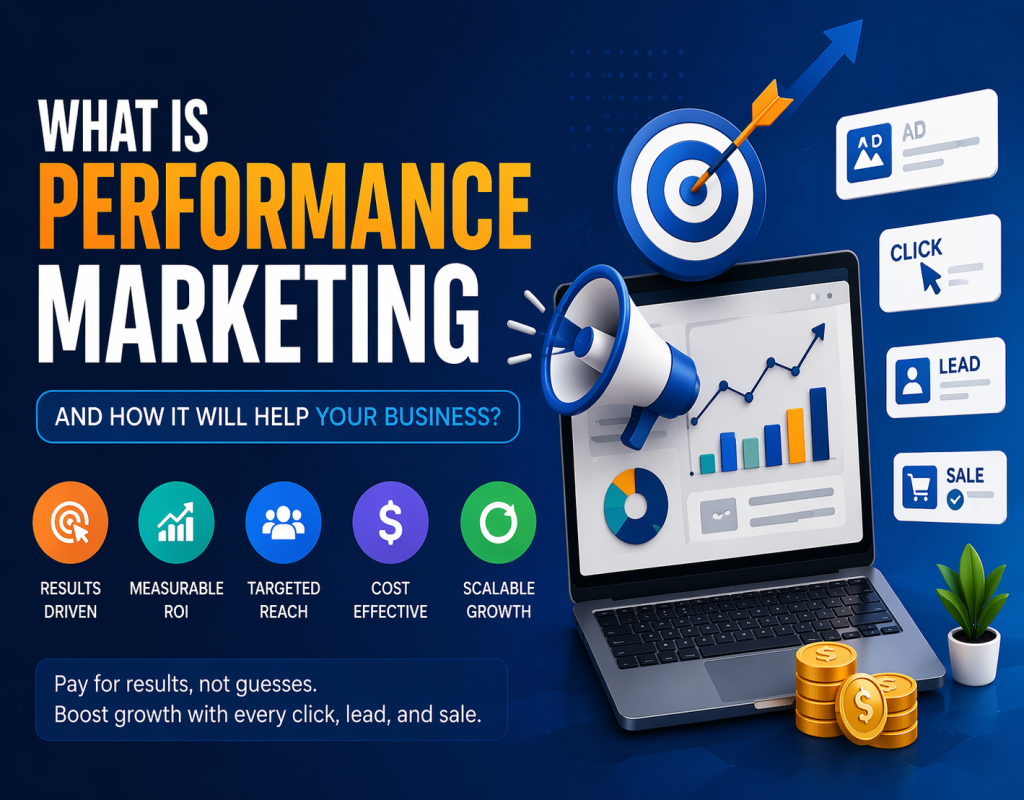
Performance marketing is a strategy where you only pay for specific actions such as clicks, leads, or sales. It’s measurable, scalable, and results-driven—making it one of the most powerful tools for modern businesses.
📊 What is Performance Marketing?
Performance marketing is a digital marketing strategy where advertisers pay only when a desired action is completed.
These actions can include:
- Website clicks
- Lead generation (form submissions)
- App installs
- Sales or conversions
Unlike traditional marketing, where you pay upfront, performance marketing ensures that every rupee spent is tied to measurable outcomes.
🔧 Key Channels in Performance Marketing
1. Paid Search (Google Ads)
Ads appear on search engines when users look for specific keywords.
2. Social Media Advertising
Platforms like Facebook, Instagram, and LinkedIn allow highly targeted campaigns.
3. Affiliate Marketing
Partners promote your product and earn a commission for each sale.
4. Display Advertising
Banner ads across websites that drive traffic and conversions.
5. Native Advertising
Ads that match the look and feel of the platform (e.g., sponsored content).
⚙️ How Performance Marketing Works
- Set a clear goal (clicks, leads, or sales)
- Choose the right platform
- Launch targeted campaigns
- Track performance using analytics tools
- Optimize campaigns based on data
Everything is measurable—from impressions to ROI—making it easy to improve results over time.
🚀 Benefits of Performance Marketing
1. Cost-Effective
You only pay for results, reducing wasted ad spend.
2. Measurable ROI
Track every click, lead, and conversion in real-time.
3. Better Targeting
Reach the right audience based on interests, behavior, and demographics.
4. Scalability
Increase budget on campaigns that are performing well.
5. Data-Driven Decisions
Make smarter marketing decisions using analytics.
📈 How Performance Marketing Helps Your Business
🔹 1. Increases Sales & Revenue
By focusing on conversions, businesses can directly boost revenue.
🔹 2. Improves Brand Visibility
Consistent campaigns increase your brand presence online.
🔹 3. Generates Quality Leads
Targeted ads bring high-intent users who are more likely to convert.
🔹 4. Reduces Risk
You’re not spending blindly—you’re investing in results.
🔹 5. Gives Competitive Advantage
Businesses using performance marketing often outperform competitors relying on traditional methods.
🧠 Best Practices for Performance Marketing
- Define clear KPIs (Cost per Lead, ROI, CTR)
- Use A/B testing for ads
- Optimize landing pages
- Retarget website visitors
- Monitor campaigns regularly
📌 Conclusion
Performance marketing is not just a trend—it’s a necessity for businesses that want measurable growth. Whether you’re a startup or an established brand, this strategy helps you maximize ROI, reduce costs, and scale faster.
If you want your marketing budget to work smarter—not harder—performance marketing is the way forward.